Our worship

Greetings! As the PRC of RI website is presently under construction, you have been directed to the pastor’s blog. The following introduces the way we worship and why.

* * *

pulpit-1In our worship, God’s Word is primary. We commit ourselves to reading God’s Word, proclaiming God’s Word, singing God’s Word, and sacramentally observing God’s Word.

We generally devote time to the public reading of holy Scripture, one chapter from the Old Testament and one from the New. This is a tragically neglected element of worship in modern Christianity and one that ought to be central in public worship (Neh. 8, 1 Tim. 4:13).

Our sermons are generally expository, sequentially studying a book of the Bible, verse by verse. This has often been called the practice of lectio continua in the history of the Church. It binds the preacher to study each verse in context, to find the grammatical and historical meaning. It keeps him from the danger of reading into the text what he wants and requires him to speak the whole counsel of God to the people of God. We cannot cheapen God’s Word by ‘cherry picking’ what we like and leaving the rest.

Yet, our afternoon messages are sometimes topical, on practical subjects. Even then, it is our concern to anchor the lesson in the Word of God, that our minds may be shaped by the mind of the Spirit speaking in Scripture.

Continue reading “Our worship”

Predestinación

untitledUn escultor se sienta en su taburete, con las mangas enrolladas. Se extiende la mano y se afianza del barro, frío, pasivo y sin forma. En el torno, él gira y le da forma al barro, elaborándolo según lo que existe en su ojo mental. Está en control total, experto en su arte. Es el señor del barro, y el producto es completamente suyo.

Todos los escultores humanos no son más que una imagen borrosa, una sombra, de Dios. El es el Escultor Supremo, haciendo los mundos, formándolos según el patrón y uso para que él los ha predeterminado. La Escritura confirma lo que la naturaleza enseña: Dios es soberano, obrando su absoluta voluntad.

Esto se extiende no sólo a la tierra inanimada o al reino animal, porque Dios es también el Escultor del hombre. Tiene un propósito predeterminado para sí, un propósito tal como le gusta. Ahora, mirando los escombros de la historia humana, puede parecer que el propósito ha fracasado. Satanás secuestró el proyecto humano, y Adány Eva quedaron arruinados. Claro está. Pero en el análisis final la voluntad de Dios no puede ser frustrada. Si fuera posible, lo degradaríamos a Dios. Despojado de la omnipotencia, él viviría no como el Formador, sino como el formado. ¡Pero Dios es Dios! “El ha hecho todo lo que le ha gustado.” Adán y Eva, complícitos con el Diablo, abusaron de su libre albedrío, y nosotros en ellos. Además, como sus descendientes, les seguimos. Pero esto no lo sorprendió a Dios. Dios ya desde la eternidad pasada determinó que el hombre cayera en el pecado y la miseria, y hasta esto cumpliría su propósito. “Conocidas de Dios son todas sus obras desde la fundación del mundo.”

Y desde antes de todo tiempo, Dios escogió del barro de la humanidad cierto número de hombres y mujeres todavía no nacidos y no existentes. El determinó formarlos y no otros en vasijas sobre las cuales derramaría merced y gloria eterna. Luego Dios también escogió soberanamente que lo demás de la humanidad fuera designado para la ruina eterna por sus pecados concretos. La vida eterna y la muerte eterna . . . éstas Dios nos las presenta como los dos destinos invisibles para las cuales este mundo no es más que una breve preparación. Algunos irán al cielo, mientras que otros serán hundidos en el infierno. ¿Y por qué? Porque Dios es el Escultor Supremo. Es el Determinador de todo. O, en breve, porque Dios es Dios. “Toda obra del Señor tiene un propósito; ¡hasta el malvado fue hecho para el día del desastre!”

Esto los ofende mucho a los hombres pecaminosos. Pablo, anticipando esta protesta, escribió, “Respondo: ¿Quién eres tú para pedirle cuentas a Dios? ‘¿Acaso le dirá la olla de barro al que la modeló: “¿Por qué me hiciste así?”’ ¿No tiene derecho el alfarero de hacer del mismo barro unas vasijas para usos especiales y otras para fines ordinarios? ¿Y qué si Dios, queriendo mostrar su ira y dar a conocer su poder, soportó con mucha paciencia a los que eran objeto de su castigo y estaban destinados a la destrucción? ¿Qué si lo hizo para dar a conocer sus gloriosas riquezas a los que eran objeto a su misericordia, y a quienes de antemano preparó para esa gloria? Esos somos nosotros, a quienes Dios llamó no sólo de entre los judíos sino también de entre los gentiles.”
Ciertamente podemos apretar los dientes, agitar el puño y protestar hasta el último grado. Pero Dios es Dios. El hace lo que le gusta. “Muchos son los invitados, pero pocos los escogidos.” “Tengo clemendia de quien quiero tenerla, y soy compasivo con quien quiero serlo.” ” . . . predestinados según el plan de aquél que hace todas las cosas conforme al designio de su voluntad.”

Si usted se enoja ante esto, usted está en peligro. La voluntad de Dios es irresistible. Usted puede echarle la culpa a Dios, pero Dios queda sin culpa. Todos sabemos que Dios no nos hace pecar; no lo hace nadie. Pero usted lucha contra Dios sin ser forzado; usted camina por la ancha senda a la destrucción por su propio libre albedrío.

Pero así como el sol ablanda algunas materias y endurece otras, Dios puede tomar esta doctrina solemne de la predestinación y emplearla para efectuar una respuesta muy distinta. El Señor está siempre ante su banco de trabajo. El usa varias herramientas para su propósito. Y hasta esta herramienta, con sus filas agudas, dentadas, está a su disposición. Quizás aun ahora él está haciéndole a usted humilde. Quizás aun ahora está infundiendo temor y ansiedad espiritual. Quizás hasta ahora usted nunca haya pensado en su destino eterno, y mucho menos la perspectiva horrible del infierno. Pero quizás ahora está pensando en ello. Y ahora usted debe ser salvado.

Clame a Dios. Invoque su nombre. Y haga mano de ese único nombre que él ha otorgado entre los hombres mediante el cual pueden ser salvados, el nombre de Jesucristo.

“What a lovely thing a rose is!”

Some robust natural theology, courtesy of the redoubtable Mr. Sherlock Holmes (from The Naval Treaty, by Sir Arthur Conan Doyle).

* * * *

“What a lovely thing a rose is!”

He walked past the couch to the open window and held up the drooping stalk of a moss-rose, looking down at the dainty blend of crimson and green. It was a new phase of his character to me, for I had never before seen him show any keen interest in natural objects.

“There is nothing in which deduction is so necessary as religion,” said he, leaning with his back against the shutters. “It can be built up as an exact science by the reasoner. Our highest assurance of the goodness of Providence seems to me to rest in the flowers. All other things, our powers, our desires, our food, are all really necessary for our existence in the first instance. But this rose is an extra. Its smell and its color are an embellishment of life, not a condition of it. It is only goodness which gives extras, and so I say again that we have much to hope from the flowers.”

Divine life in the soul

images“Before I descend to a more particular consideration of that divine life wherein true religion doth consist, it will perhaps be fit to speak a little of that natural or animal life which prevails in those who are strangers to the other: and by this I understand nothing else, but our inclination and propension towards those things which are pleasing and acceptable to nature; or self-love issuing forth and spreading itself into as many branches as men have several appetites and inclinations. The root and foundation of the animal life, I reckon to be sense, taking it largely, as it is opposed unto faith, and importeth our perception and sensation of those things that are either grateful or troublesome to us. Now these animal affections, considered in themselves, and as they are implanted in us by nature, are not vicious or blameable; nay, they are instances of the wisdom of the Creator, furnishing his creatures with such appetites as tend to the preservation and welfare of their lives. These are instead of a law unto the brute beasts, whereby they are directed towards the ends for which they were made: but man being made for higher purposes, and to be guided by more excellent laws, becomes guilty and criminal when he is so far transported by the inclinations of this lower life as to violate his duty, or neglect the higher and more noble designs of his creation. Our natural affections are not wholly to be extirpated and destroyed, but only to be moderated and overruled by superior and more excellent principle. In a word, the difference betwixt a religious and wicked man is, that in the one divine life bears sway, in the other the animal life doth prevail.”

-Henry Scougal (1650-1678)

Predestination

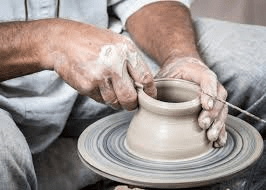
untitledA sculptor sits down on his stool, his sleeves rolled up. He reaches out and lays hold of the clay – cold, passive, and formless. On the wheel, he spins and shapes the clay, fashioning it into that which is before his mind’s eye. He is in total control, the master of his art. He is the lord of the clay, and the product is wholly his.

All human sculptors are but a hazy image, a shadow of God. He is the Prime Sculptor, making the worlds, shaping them into the pattern and use for which He has predetermined them. Scripture confirms what nature teaches. God is Sovereign, performing His absolute will.

This extends not only to lifeless earth or to the animal kingdom, for God is also Sculptor of man. He has a predetermined purpose for him, a purpose as it pleases Him. Now, looking at the wreckage of human history,  it may seem as though God’s purpose has failed. Satan hijacked the man-project, and Adam and Eve were ruined. True enough. But God’s will cannot in the end be thwarted. If it can, we demote God. Shorn of omnipotence, He lives not as the Shaper, but as the shaped.  But God is God!  And “He has done whatever pleased Him.”

Adam and Eve, complicit with the Devil, abused their free will – and we in them. Further, we have as their offspring followed suit. But this did not catch God off-guard. God had already from eternity past determined that man should fall into sin and misery, and even this would fulfill His purpose. “Known unto God are all his works from the foundation of the world.”

And from before all time, God chose from the clay of mankind a number of men and women as yet unborn and non-existent. He determined to fashion them and not others into vessels on which He would lavish mercy and eternal glory. Then God also sovereignly chose that the rest of mankind should be designed for eternal ruin for their eventual sins. Everlasting life and everlasting death – these the Bible presents to us as the two unseen destinies for which this world is but a brief preparation. Some will go to heaven, while others will be plunged into hell. And why? Because God is the Master Sculptor. He is the Determiner of everything. Or, in short, because God is God. “He hath made all things for himself, yea, even the wicked for the day of judgment.”

This rubs sinful men the wrong way. Paul, anticipating this objection, wrote,

“Nay but, O man, who art thou that repliest against God? Shall the thing formed say to him that formed it, Why hast thou made me thus? Hath not the potter power over the clay, of the same lump to make one vessel unto honour, and another unto dishonour? What if God, willing to shew his wrath, and to make his power known, endured with much longsuffering the vessels of wrath fitted to destruction: and that he might make known the riches of his glory on the vessels of mercy, which he had afore prepared unto glory, Even us, whom he hath called, not of the Jews only, but also of the Gentiles” (Rom. 9:20-24).

We can surely can clench our teeth, shake our fists, and protest all we want. But God is God. He does as it pleases Him. “Many are called, but few are chosen.” “I will have mercy on whom I will have mercy, and I will have compassion on whom I will have compassion.” “Elect according to the purpose of him who worketh all things after the counsel of his own will .”

If you chafe at this, you do it at your peril. God’s will is irresistible. You can fault God, but God is faultless.  We all know that does not make us sin; no one does. But you fight God unforced; you walk down the broad path to destruction of your own free will.

But just as the sun softens some materials and hardens others, so God can take this solemn doctrine of predestination and use it to bring about a very different response. The Master is ever at His workbench.  He uses various tools for his purpose. And even this tool, with its seemingly sharp, serrated edges, is at his disposal. Perhaps even now He is humbling you.  Perhaps now He is instilling fear and spiritual anxiety.  Perhaps until now you have never thought of your eternal destiny before, much less the horrifying prospect of hell.  But maybe now you are.  And now you must be saved.

Cry out to God.  Call upon His name.  And lay hold of that only name that He has given among men through which they may be saved, the name of Jesus Christ.




The human body as image of God

study-of-arms-and-hands“With our body we see, we speak, we walk, we descend, we climb, and so much more.  And in the Holy Scripture, all these functions, and so many more, are ascribed not only to our God, but they are ascribed in terms of the same senses and members of the body that we use for them. God also hears with his ear, sees with his eye, walks with his feet, strikes with his hand, saves with his arm, points with his finger, feels with his heart, moans in his inner parts, shows wrath in his face, and so much more. Of all these expressions and manifestations of life in God, an imprint has been put in man, and this imprint expresses itself through the members and senses of the body. And for this reason it won’t do to say that our body as such has nothing to do with the image of God.”

-Abraham Kuyper, Common Grace, 1:187

“Stoop, stoop!”

“The last time I saw your father [Cotton Mather] was in the beginning of 1724, when I visited him after my first trip to Pennsylvania. He received me in his library, and on my taking leave showed me a shorter way out of the house through a narrow passage, which was crossed by a beam overhead. We were still talking as I withdrew, he accompanying me behind, and I turning partly towards him, when he said hastily, “Stoop, stoop!” I did not understand him, till I felt my head hit against the beam. He was a man that never missed any occasion of giving instruction, and upon this he said to me, “You are young, and have the world before you; STOOP as you go through it, and you will miss many hard thumps.” This advice, thus beat into my head, has frequently been of use to me; and I often think of it, when I see pride mortified, and misfortunes brought upon people by their carrying their heads too high….”

-Benjamin Franklin, in a letter to Samuel Mather, 1784

* * *

Friend, Benjamin Franklin passes on good advice.  Yet sadly, from what I know if him, he did not stoop far enough.  We as sinners must stoop, indeed, bow down in the dust before God in Christ, begging for mercy. Only when we are hopelessly prostrate in the dust, looking for free and sovereign grace in the blood of Christ, can we be lifted up and spared for time and eternity.  So stoop, sinner, stoop!

Christ’s return to judgment, the completion of His work

662a7aecb7“. . . the return of Christ unto judgment is not an arbitrary addition that can be isolated from his preceding work and viewed by itself.  It is a necessary and indispensable component of that work.  It brings that work to completion and crowns it.  It is the last and highest step in the state of his exaltation.

“Because Christ is the savior of the world, he will someday return as its judge.  The crisis,  or judgment (krisis),  that he precipitated by his first coming he consummates at the second coming.  The Father gave him authority to execute judgment (krisin poeiein) because he is the Son of Man (John 5:27).  Eschatology, therefore, is rooted in Christology and is itself Christology, the teaching of the final, complete triumph of Christ and his kingdom over all his enemies.  In accord with Scripture, we can go back even further.  The Son is not only the mediator of reconciliation (mediator reconciliatonis) on account of sin, but even apart from sin he is the mediator of union (mediator unionis) between God and his creation.  He is not only the exemplary cause (causa exemplaris) but also the final cause (causa finalis) of creation.  In the Son the world  has its foundation and example, and therefore it has in him its goal as well.  It is created through him and for hims as well (Col. 1:16).  Because the creation is his work, it cannot and may not remain the booty of Satan.  The Son is the head, Lord, and heir of all things.  United in the Son, gathered under him as their  head, all creatures return to the Father, the fountain of all good.  The second coming is therefore required by his first coming.  It is implied in the first; in time, by inner necessity, it will proceed from the first; the second coming brings the first coming to its full effect and completion and was therefore comprehended in a single image with the first coming by Old Testament prophecy.”

– Herman Bavinck, Reformed Dogmatics (4:685).

The springtime of salvation

Vision%20of%20St%20Bernard%20with%20Sts%20Benedict%20&%20John%20Evan%20Fra%20Bartolomeo“The tokens of the Passion we recognize as the fruitage of the ages of the past, appearing in the fullness of time during the reign of sin and death (Gal. 4.4). But it is the glory of the Resurrection, in the new springtime of regenerating grace, that the fresh flowers of the later age come forth, whose fruit shall be given without measure at the general resurrection, when time shall be no more. And so it is written, ‘The winter is past, the rain is over and gone, the flowers appear on the earth’ (Cant. 2.11 f); signifying that summer has come back with Him who dissolves icy death into the spring of a new life and says, ‘Behold, I make all things new’ (Rev. 21.5). His Body sown in the grave has blossomed in the Resurrection (I Cor. 15.42); and in like manner our valleys and fields which were barren or frozen, as if dead, glow with reviving life and warmth.”

-Bernard of Clairvaux (1090 – 1153)