
The wanderer
A tasteless Jesus?
“Jesus Christ is like the white of an egg, tasteless in the world’s mouth.”
-Samuel Rutherford (1600-1661)
“The wrathful God is made loving”
“Secondly, propitiation is not a turning of the wrath of God into love. The propitiation of the divine wrath, effected in the expiatory work of Christ, is the provision of God’s eternal and unchangeable love, so that through the propitiation of his own wrath that love may realize its purpose in a way that is consonant with and to the glory of the dictates of his holiness. It is one thing to say that the wrathful God is made loving. That would be entirely false. It is another thing to say the wrathful God is loving. That is profoundly true. But it is also true that the wrath by which he is wrathful is propitiated through the cross. This propitiation is the fruit of the divine love that provided it. “Herein is love, not that we loved God, but that he loved us and sent his Son to be the propitiation for our sins” (I John 4:10). The propitiation is the ground upon which the divine love operates and the channel through which it flows in achieving its end.”
-John Murray, Redemption Accomplished & Applied
The enigmas of Jesus
 “The thing above all else to be remembered is that, according to all the Gospels – Synoptics no less than John, Mark no less than Matthew and Luke – Jesus was a supernatural Person. On that view it was inevitable that an atmosphere of mystery should envelop Him. It would be unnatural to expect that the career of such a Person should unfold itself smoothly and transparently, that there should be no riddles, no problems, no apparent contradictions. And a certain amount of secrecy might also reasonably be expected. The privacy of the supernatural, its tendency to withdraw from the glare of public exposure must be taken into account. . . [even] from a purely literary point of view, is it not likely that Mark, writing the life of such a Person, should have taken pains to introduce something of the chiaroscuro in which the supernatural is [accustomed] to veil itself?”
-Geerhardus Vos, The Self-Disclosure of Jesus, p. 69
A true feast for sore eyes
Q. 38.43. What is the difference between believers seeing God here, and their seeing him there? Here they have only a sight, as it were, of his back parts: but there they shall see his face, Rev 22:4; it is but a passing view they can have of him here, but there they shall eternally, without interruption, feed the eyes of their souls upon him, Ps 17:15: “As for me, I will behold thy face in righteousness: I shall be satisfied, when I awake, with thy likeness.”
-James Fisher, Fisher’s Catechism (1753)
¿Por qué se sublevan las naciones?

Un sermón del Pastor Luis Morales sobre el Salmo 2:1.
Restored to the self I had lost
 “Reason & natural justice alike move me to give up myself wholly to loving Him to whom I owe all that I have and am. But faith shows me that I should love Him far more than I love myself, as I come to realize that He hath given me not my own life, but even Himself… In the first creation He gave me myself; but in His new creation He gave me Himself, and by that gift restored me to the self that I had lost. Created first and then restored, I owe Him myself twice over in return for myself. But what have I to offer Him for the gift of Himself? Could I multiply myself a thousand-fold and then give Him all, what would that be in comparison with God?”
– Bernard of Clairvaux (1090-1153)
Of Nativity and naïvete
 “You will hear people say, ‘The early Christians believed that Christ was the son of a virgin, but we know that this is a scientific impossibility’. Such people seem to have an idea that belief in miracles arose at a period when men were so ignorant of the course of nature that they did not perceive a miracle to be contrary to it. A moment’s thought shows this to be nonsense: and the story of the Virgin Birth is a particularly striking example. When St Joseph discovered that his fiancée was going to have a baby, he not unnaturally decided to repudiate her. Why? Because he knew just as well as any modern gynaecologist that in the ordinary course of nature women do not have babies unless they have lain with men. No doubt the modern gynaecologist knows several things about birth and begetting which St Joseph did not know. But those things do not concern the main point–that a virgin birth is contrary to the course of nature. And St Joseph obviously knew that. In any sense in which it is true to say now, ‘The thing is scientifically impossible’, he would have said the same: the thing always was, and was always known to be, impossible unless the regular processes of nature were, in this particular case, being over-ruled or supplemented by something from beyond nature. When St Joseph finally accepted the view that his fiancée’s pregnancy was due not to unchastity but to a miracle, he accepted the miracle as something contrary to the known order of nature. All records of miracles teach the same thing.”
-C. S. Lewis, On Miracles
Jesus’ foresight
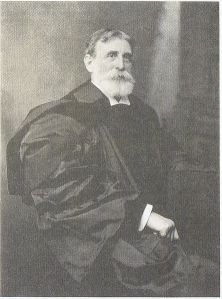 “The work which He came to do was a work ordained in the counsels of eternity, and in all its items prepared for beforehand with the most perfect prevision. In addressing Himself to the accomplishment of this work Jesus proceeded from the beginning in the fullest knowledge of the end, and with the most absolute adjustment of every step to its attainment. It is from this double view-point that each of the Evangelists depicts the course of our Lord’s life on earth. They consequently represent Him as having come to perform a specific task, all the elements of which were not only determined beforehand in the plan of God, but adumbrated, if somewhat sporadically, yet with sufficient fulness for the end in view, in the prophecies of the OT. And they represent Him as coming to perform this task with a clear consciousness of its nature and a competent control of all the means for its discharge, so that His whole life was a conscientious fulfilment of a programme, and moved straight to its mark. The conception of foresight thus dominates the whole Evangelical narrative.”
-B. B. Warfield
 The Reformed Parish