El arrepentimiento de Dios

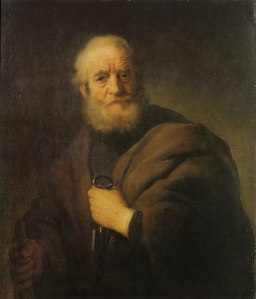
Jacopo_Bassano_workshop_-_Animals_boarding_the_Noah's_Ark_-_Louvre“Y se arrepintio Jehova de haber hecho hombre en la tierra” (Gen. 6:6).

El arrepentimineto que aqui se atribuye a Dios no pertenece propiamente a el, sino tiene referencia a nuestro entendimiento de el. Pues porque no podemos entenderlo como es, es necesario que para nuestra ayuda, en un sentido, se transforme. Que el arrepentimiento no puede suceder en Dios, aparece facilmente de esta consideracion que nada sucede que es por el inesperado o no previsto. El mismo razonamiento, y comentario, aplica a lo que sigue, que Dios fue afectado por tristeza. Ciertamente Dios no siente pesadumbre o tristeza, pero permanece para siempre como si mismo en su reposo celestial y contento: no obstante, porque de ninguna otra manera se podria saber cuan grande es el odio y la detestacion de Dios para el pecado, el Espiritu se acomoda a nuestra capacidad. Por tanto, no hay necesidad de involucrarnos en preguntas dificiles y espinosas, cuando es obvio a que fin se emplean estas palabras de arrepentimiento y dolor; lo que es, para enseñarnos que desde el tiempo en que al hombre fue tan grandemente corrompido, Dios no lo contaba entre sus criaturas; como si dijera, ‘Esta no es mi maniobra; este no es el hombre que forme en mi propia imagen, y a quien adorne con tales dones excelentes: no me digno ahora reconocer esta degenerada y contaminada criatura como mia.’ Semejante a esto es lo que dice, en el segundo lugar, acerca del dolor; que Dios estuvo tan ofendido por la impiedad atroz del hombre, como si hubiesen herido su corazon con angustia mortal: Hay aqui, por lo tanto, un antitesis inexpresado entre esa naturaleza justa que habia sido creada por Dios, y la corrupcion que broto del pecado. En lo mientras, a menos de que queremos provocar a Dios, y causarle dolor, aprendamos aborrecer y huir del pecado. Ademas, esa bondad y ternura paternal debe de, en forma no leve, sojuzgar en nosotros el amor al pecado; puesto que Dios, para mas efectualmente penetrar nuestros corazones, se viste de nuestros afectos. Esta figura, que representa a Dios como transferiendo a si mismo lo que pertenece a la naturaleza humana, se llama anthropopatheia.

Juan Calvino (1509-1564)

No margin of error

In our morning message, we considered Genesis 7, the ancient story of the Flood. On that day of reckoning, sinners saw God for what He is – God.  And then they breathed their last. All this fell out just as God predicted, with zero “margin of error.” Here’s a short clip:

To listen to the complete sermon, click here.


God’s repentance

Jacopo_Bassano_workshop_-_Animals_boarding_the_Noah's_Ark_-_Louvre

“And  it  repented  the  Lord  that  he  had  made  man  on  the  earth.”

The repentance which is here ascribed to God does not properly belong to him, but has reference to our understanding of him. For since we cannot comprehend him as he is, it is necessary that, for our sakes he should, in a certain sense, transform himself. That repentance cannot take place in God, easily appears from this single considerations that nothing happens which is by him unexpected or unforeseen. The same reasoning, and remark, applies to what follows, that God was affected with grief. Certainly God is not sorrowful or sad; but remains forever like himself in his celestial and happy repose: yet, because it could not otherwise be known how great is God’s hatred and detestation of sin, therefore the Spirit accommodates himself to our capacity. Wherefore, there is no need for us to involve ourselves in thorny and difficult questions, when it is obvious to what end these words of repentance and grief are applied; namely, to teach us, that from the time when man was so greatly corrupted, God would not reckon him among his creatures; as if he would say, ‘This is not my workmanship; this is not that man who was formed in my image, and whom I had adorned with such excellent gifts: I do not deign now to acknowledge this degenerate and defiled creature as mine.’ Similar to this is what he says, in the second place, concerning grief; that God was so offended by the atrocious wickedness of men, as if they had wounded his heart with mortal grief: There is here, therefore, an unexpressed antithesis between that upright nature which had been created by God, and that corruption which sprung from sin. Meanwhile, unless we wish to provoke God, and to put him to grief, let us learn to abhor and to flee from sin. Moreover, this paternal goodness and tenderness ought, in no slight degree, to subdue in us the love of sin; since God, in order more effectually to pierce our hearts, clothes himself with our affections. This figure, which represents God as transferring to himself what is peculiar to human nature, is called anthropopatheia.

– John Calvin (1509-1564)


Of spectators and combatants

“Perhaps you wonder, ‘Why are the wicked joyous? why do they live in luxury? why don’t they have to strive like I do?’

“The reason is that they who have not signed up to strive for the crown are not required to undergo the labors of the contest. Those who haven’t gone down to the track don’t smear themselves with oil, nor get covered with dust. Trouble comes only to those on their way to glory. The perfumed spectators prefer to watch, not to join in the struggle, nor to endure the sun, the heat, the dust, and the rain.

“So those who have devoted themselves to pleasures, luxury, robbery, gain or honors are spectators rather than combatants. They have the profit of labor but the not the fruits of virtue. They love their ease. By cunning and wickedness they heap up riches. But they will pay the penalty of their iniquity, though it be late in coming. Their rest will be in hell, yours in paradise. Thus, Job said beautifully that they watch in the tomb (see Job 21:32), for they cannot have the calm of quiet rest that he enjoys who shall rise again.”

-Ambrose of Milan (337-397 A.D.)

Small sins

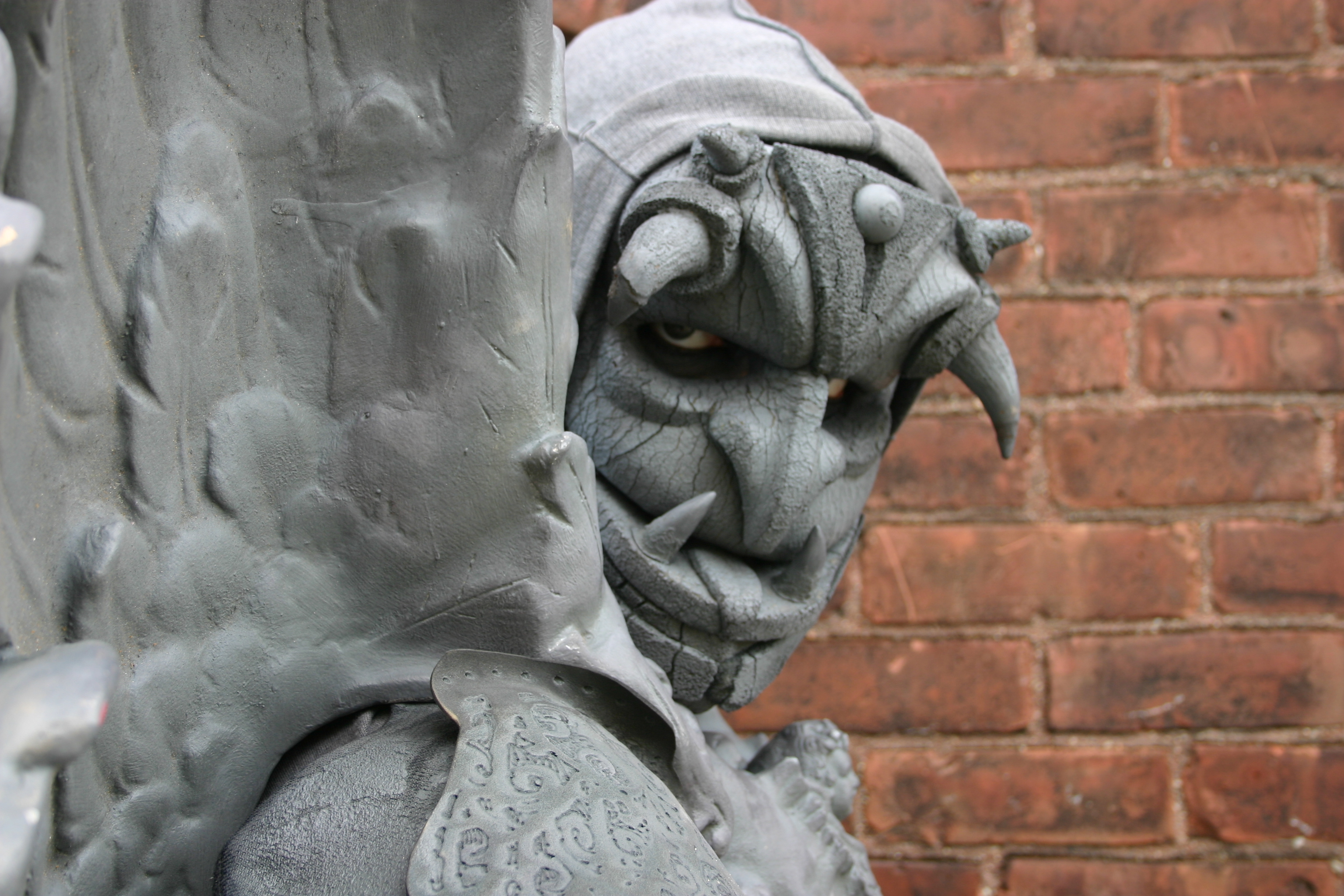
Gargoyle_enhanced“You will say that these are very small sins; and doubtless, like all young tempters, you are anxious to be able to report spectacular wickedness. But do remember, the only thing that matters is the extent to which you separate the man from the Enemy. It does not matter how small the sins are provided that their cumulative effect is to edge the man away from the Light and out into the Nothing. Murder is no better than cards if cards can do the trick. Indeed the safest road to Hell is the gradual one-the gentle slope, soft underfoot, without sudden turnings, without milestones, without signposts.”

– “Screwtape” to “Wormwood,” in Screwtape Letters, by C. S. Lewis

The best suffering

Here’s a short clip from our last sermon on 1 Peter 3:17-18, “For it is better, if the will of God be so, that ye suffer for well doing, than for evil doing. For Christ also hath once suffered for sins, the just for the unjust, that he might bring us to God, being put to death in the flesh, but quickened by the Spirit.”

To listen to the entire sermon, click here.

“The body valuable in God’s sight”

“But the proof of the possibility of the resurrection of the flesh I have sufficiently demonstrated, in answer to men of the world. And if the resurrection of the flesh is not found impossible on the principles even of unbelievers, how much more will it be found in accordance with the mind of believers! But following our order, we must now speak with respect to those who think meanly of the flesh, and say that it is not worthy of the resurrection nor of the heavenly economy, because, first, its substance is earth; and besides, because it is full of all wickedness, so that it forces the soul to sin along with it. But these persons seem to be ignorant of the whole work of God, both of the genesis and formation of man at the first, and why the things in the world were made. For does not the word say, Let Us make man in our image, and after our likeness? Genesis 1:26 What kind of man? Manifestly He means fleshly man, For the word says, And God took dust of the earth, and made man. Genesis 2:7 It is evident, therefore, that man made in the image of God was of flesh. Is it not, then, absurd to say, that the flesh made by God in His own image is contemptible, and worth nothing? But that the flesh is with God a precious possession is manifest, first from its being formed by Him, if at least the image is valuable to the former and artist; and besides, its value can be gathered from the creation of the rest of the world. For that on account of which the rest is made, is the most precious of all to the maker.”

-Justin Martyr (100-165 A.D.)

A baby, a spoon & striking (!) evidence for God

Flickr.com“In a newly formed mind, there is no idea of nature or of a single object in nature – yet no sooner is an object presented, or is an event observed to happen, than there is elicited the tendency of the mind to presume on the constancy of nature. At least as far back as our observation extends, this law of the mind is in full operation. Let an infant for the first time in its life, strike on the table with a spoon, and, pleased with the noise, it will repeat that stroke with every appearance of a confident anticipation that the noise will be repeated also.”

-Thomas Chalmers, On Natural Theology, Vol. 1