
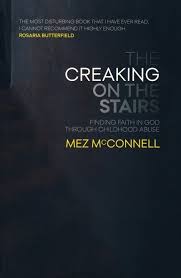
Just finished listening to this audiobook, The Creaking on the Stairs: Finding Faith in God Through Childhood Abuse. Very highly recommended. Rosaria Butterfield says in the forward, “The most disturbing book that I have ever read, and I cannot recommend it highly enough.” While I can’t say it is the most disturbing book I’ve ever read, the subject matter is beyond doubt extremely disturbing … and yet heavenly at the same time, which is why I heartily second Rosaria.
The author, Mez McConnell, was raised up in an extremely dysfunctional and highly abusive home. After coming of age, he fell into gross, reckless sin, became a criminal, and did hard time; but Christ had other plans. And so at the “time appointed,” Christ made a trophy of this sinner, plucking him as a brand from the burning and liberating his heart from anger, bitterness, and resentment.
The book is part narrative, part theology and spiritual reflection. It reminds me in many ways of Augustine’s great Confessions and Thomas Halyburton’s Memoirs, especially in its adult, post-conversion reflections on childhood, sin, and grace. (If you’ve never read those two classics, then tolle, lege—“take up and read!’ And for a taste, read Augustine’s thoughts on the ‘pear tree’ incident.) Further, Creaking is dramatic theodicy—if not directly inspired by the Book of Job, then at least resonating highly with it. If God is and is good, then why is there suffering?
This book is for those who have suffered abuse, Christian or not. It’s also for those who live with those who have or want to understand how better to love and support sufferers. Really, it’s for everyone. And I would be surprised if this doesn’t end up being something of a modern, Christian classic of autobiography, like Joni Eraekson Tada’s Joni and Rosaria Butterfield’s Secret Thoughts. Oh, and add those two to your list as well!

 The Reformed Parish