

Thus, the Apostle James (Jas. 5:13). Accordingly, the New England Puritans and colonial Presbyterians worshipped the Lord in their church meetings with a capella psalm singing to metrical, rhymed versions of the Psalter. Our godly forefathers worshipped this way, believing it to be the rule for all the New Testament churches. To learn more, see here and here.
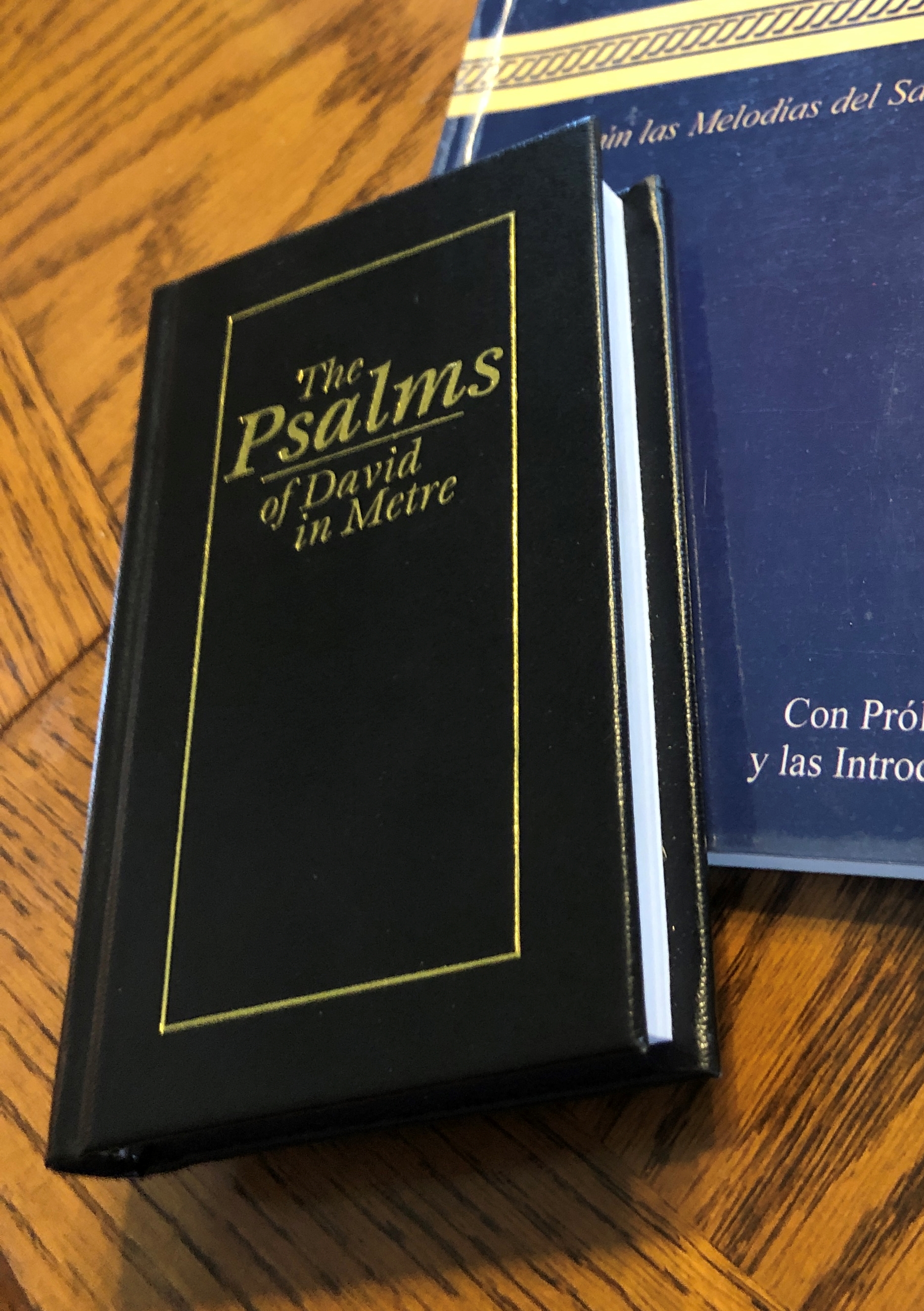
In the interests of reviving psalm-singing among Christians in the northeast, we are giving away five free copies of The Psalms of David in Metre (1650) to the first five who respond from anywhere in New Jersey, greater Philadelphia, or the New York metro — provided you don’t already belong to a psalm-singing (EP) church or already have a copy. If you would like to try signing the psalms, try joining in here. To get one of these free copies, drop me a note at michael at reformedparish dot com with your address, and we’ll drop it in the mail.
Consider John Calvin’s commendation of psalm-singing in his preface to the Geneva Psalter of 1543:
So what are we to do? We should have songs that are not only upright but holy, that will spur us to pray to God and praise Him, to meditate on His works so as to love Him, to fear Him, to honour Him, and glorify Him. For what St. Augustine said is true, that one can sing nothing worthy of God save what one has received from Him. Wherefore though we look far and wide we will find no better songs nor songs more suitable to that purpose than the Psalms of David, which the Holy Spirit made and imparted to him. Thus, singing them we may be sure that our words come from God just as if He were to sing in us for His own exaltation. Wherefore, Chrysostom exhorts men, women, and children alike to get used to singing them, so as through this act of meditation to become as one with the choir of angels.”

 The Reformed Parish